Showing posts with label Addiction. Show all posts

Wednesday, May 22, 2024

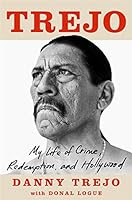
Book Review: 'Trejo' by Danny Trejo

✰✰✰✰½ Danny Trejo is a very recognizable man both on screen and off, but his own story is the stuff movies are made of. In this autobiography, Danny shares stories of growing up, surviving prison time, overcoming addiction, and landing roles in movies. He's led a very busy life and is still going strong. From a life of crime to leading man, Trejo's story is motivating and engaging. 

The Bottom Line: This was a quick weekend read. Although not for sensitive readers, I appreciated the author's candidness. Trejo's ability to turn his life around is inspiring. He has faced plenty of adversity, and besides reaching fame, he has reached out and helped many along the way. This autobiography is an interesting read; enthusiastically recommended for anyone who enjoys books about celebrity life.

Book Club Notes: Our group rating averaged around 4.5 on a scale of 1 - 5. This book was readable and engaging. The author tells it like it is and isn't shy. Highly recommended for groups that enjoy celebrity autobiographies. We also took a look at Danny's cookbook, Trejo's Tacos. He's a very busy man, who has ended up doing great work in the area of addiction and recovery. 

At the time of our discussion, there weren't any discussion questions available online. Thus, as the facilitator, I created a list of questions which are available below. You are free to use these questions for your personal use, but please credit this site. Thank you!

Discussion Questions: 

Did you know anything about this person prior to reading this book? 


Family:
Discuss Danny’s relationship with his father? How did his father treat others?


Discuss the family secret. How did that affect his relationships with his parents? And how did the secret affect the way Danny thought of women in his own relationships. 


Was his family a good influence on Danny? Or bad? What was the family legacy?


Danny talks about a culture of destructive machismo. What did it mean to be a Trejo man?

 
Why was Trejo a disappointment to his father?

 
How did the birth of Danny Boy change his life?


How does Danny Boy moving to live with his mother affect Danny?


What impact did it have on Danny Boy? Did it give him opportunities his siblings didn’t have?


What kind of a father was Trejo to his own children? 


How did his father’s death affect his relationship with his mother?

 
Prison Life:
Discuss Danny’s time in prison. How did he survive?


Talk about fighting fires. How did it make them feel? 


Danny describes San Quentin as the most Right Now place on Earth.

What does he mean by that?


How did boxing benefit Danny? 


Discuss the two types of people in prison: predator & prey. 


How had the world changed while he was in prison?


When he got out, his own parents didn’t want him at home. How did that make him feel? Was he going to be able to handle the outside world? Had too much changed?


Discuss the first time he robbed a store?


How did movies help Danny in prison?


Women:
Discuss his relationship with his wives/partners.

What was his relationship with women/girls like as a child?

How did Danny view marriage? 


Discuss “one in the house, one in the street.” 


How did he finally lose everything to Debbie Shreve? 


How did his daughter Danielle make Danny rethink how he thought about and spoke to women?


Faith:
How did faith help Trejo overcome his addiction? He writes on p. 57, “Faith shoves fear out of the room. There’s no room for fear if you fill your soul with faith.”


Discuss his first attempt at morning prayer/meditation: Zip-a-Dee-Doo-Dah.


Discuss forgiveness. Danny talks about the magic of forgiveness. What makes forgiveness so profound? How does one start?


Addiction:
Discuss trying drugs for the first time. How did Uncle Gilbert influence him? Was Danny influenced by genetics or environment?


Discuss the turning point for Danny. What made him want to get sober and stay sober?


Discuss his work in rehabilitation.


Danny writes that the one thing people are surprised about when it comes to recovery is the laughter. How is laughter a great healer? 


Discuss Danny’s work in the field of treatment and recovery. How did it change him? 


Danny writes that he was able to get more done than the average therapist or social worker. Why is that? 


Celebrity:
Discuss his start in movies?


How did he learn to act?


What roles did he play?


Do you think for some of the roles he was hired as an actor? Or as an ex-convict?


What influence has he had in the industry? What influence has he had with Latino actors?


Discuss Machete. How did that film/role affect his celebrity status in children? How did he handle that responsibility?


What do superhero or fantasy movies give the audience? (Hope & strength)


Has Danny been a positive influence overall?


General Questions:
Did your opinions change after reading the book?

Let’s talk about the writing style and language of the book, in particular, the use of profanity.


What are the book’s strengths & weaknesses? 


How thought-provoking did you find this book?


What was the main theme of this book? 


Did you learn anything new from the author? Please share.


Was there a specific story that stood out for you? Or a quote? Something memorable? Impactful? Shocking? Or surprising? 


What are some of the social implications of the book? How does it challenge or support your beliefs? 


How did Trejo portray the other people in his life in this book? Who influenced him the most? How did women influence him (childhood, relationships, daughter)?


Discuss some of Danny’s poor choices? What were some of his good choices?


How did Trejo discuss his relationship with his parents? And how did this change over time?


Did this story make you reflect on your own life & experiences at all? How so?


Is Trejo a reliable narrator of his own history? 


Discuss the photos included in the book.


Why do you think the author was motivated to share his life story? What was his goal?  Do you think the author was trying to elicit a certain response? Has the book changed how you view the author?


Were there any instances in which you felt the author was not being truthful? Why? How did you react to these sections?


What is the author’s most admirable quality? Is this someone you would want to know?


How does this book compare to other memoirs you have read?

Is there anything you like or dislike about the book that we haven’t discussed yet? 

Trejo talks about the 1950s, 60s, & 70s. What are your thoughts about life during those decades? 

What was the most challenging or difficult part of this book to read. How did you overcome it?

Would this make a good movie? Who would you cast?

If you could ask Danny one question, what would it be?

Danny drops many celebrity names, what did you think about including other celebrities?


How much do you think Donal Logue contributed to this project? 

Ratings 1 - 5. Why did you like this book or not? Would you recommend it to someone? 

NOTE: This list of questions was created by Nana Herron for MiniBookBytes Book Reviews and is available for personal use only. As a courtesy, please credit this site. Thank you! 

Details: Trejo: My Life of Crime, Redemption, and Hollywood by Danny Trejo with Donal Logue. Paperback published by Atria in 2021. 288 p. ISBN: 978-1982150839

Monday, November 7, 2022

Book Review: 'A Street Cat Named Bob' by James Bowen

✰✰✰✰½ James Bowen was one of many buskers in London. Originally from Australia, Bowen had struggled to make his way. As a recovering addict, he had recently secured a flat. One day he noticed an injured cat in the hallway. He was immediately inspired to help this creature even though he could barely take care of himself. With little to spare, James sought medical help for the cat, now named Bob. After nursing Bob back to good health, Bowen released him. Given the choice, Bob had other ideas and decided to follow Bowen on his busking jobs. The man and cat quickly became an inseparable duo. And this is their story…one of friendship, adventure, survival, and love.

The Bottom Line: This heartwarming tale is perfect to read anytime…on a lunch break, while traveling, or even at the beach. It’s an easy read that will inspire you to look at people differently. Sadly, Bob passed away in 2020, but this story will live on and continue to inspire. Highly recommended for everyone interested in human-animal relationships, friendship, homelessness, and addiction.

Book Club Notes: In a nutshell, we loved this book! On a scale from 1 – 5 with 5 being the highest, the average rating for this book was 4.5. The movie was entertaining and captured the essence of the book. We enjoyed the unique perspective of seeing things from Bob’s point of view; how cute was that?

All in all, the book/movie taught us to see things from a different perspective, to stop stereotyping, and to give people (and animals) a chance. Most of us have interacted with a special animal sometime in our lives, so it was easy to connect with Bob’s story. Discussion questions are plentiful online, but the resource that stood out is available from the Okanagan Regional Library.

This book club pick is very highly recommended for book clubs interested in a feel good title that still has lots of deep topics to discuss. Check it out for your book club today!

Details: A Street Cat Named Bob: And How He Saved My Life by James Bowen. Paperback published by Thomas Dunne Books in 2012. 320 p. ISBN: 978-1-250-04867-7 


Sunday, March 27, 2022

Book Review: 'Cash: The Autobiography' by Johnny Cash

✰✰✰✰  When you pick up this book, set aside your preconceived idea of what it is like to be a celebrity. Here, Johnny Cash tells his story in his own words. He doesn’t sugarcoat much, but instead tells it like it is. Cash has been everywhere and done it all. This book is a roller coaster ride full of life's ups and downs with thoughts about the wisdom of life on the road and a sprinkling of religious undertones. Cash openly shares what life both on and behind the stage was really like. 

The Bottom Line: Recommended for fans of Johnny Cash and country music in general. This book features short chapters that are easy to read, and the black and white photos offer a glimpse into Cash’s life.


Book Club Notes: Our spring meeting was a much smaller group this time around. Maybe we are just getting tired of Zoom, and are looking forward to in-person meetings. Reviews for both the book and the movie mirrored the current weather here in Chicagoland, dreary. Both received a rating of 3.9 on a scale of 1 - 5, with 5 being the highest. Members commented that the book was realistic and didn’t paint a pretty picture. Some liked the diary-like style while others did not appreciate it. However, we agreed that Cash was open to being vulnerable in his words and seemed down to earth. Additionally, the book reads like a who’s who in country music. Meanwhile, the movie, Walk the Line, is entertaining; however, it only shows part of Johnny Cash’s life. Many details of his life were left out, and the scenes depicting his first wife, Vivian Liberto, may have unfairly put her in an unappealing light. We concluded there is probably a lot we’ll never know about the legend, the man, and the myth that was Johnny Cash. 


Discussion questions were not that easy to find for this book, but here are a couple of links: Docslib and BookRags. Recommended for book groups who enjoy music, biographies, and history about music.


Details: Cash: The Autobiography by Johnny Cash with Patrick Carr. Paperback published by HarperOne in 1997. 320 p. ISBN: 978-0-06-0727-53-6


Monday, March 30, 2020

Book Review: 'American Fix' by Ryan Hampton

✰✰½ The numbers are staggering. Whether you realize it or not, almost everyone knows someone who is dealing with the opioid addiction epidemic in America. It could be your co-worker, neighbor, parent, sibling, or friend. Opioid addiction  can affect anyone. No one is immune. But how did we get to this point? Who is at fault? Many would blame the person with substance use disorder, but there are so many other aspects of this epidemic to consider. American Fix takes a look at Big Pharma, the healthcare community, local resources, and the government.

The author, Ryan Hampton, offers a unique perspective to this issue. As a person in recovery, Hampton has taken on the challenge of putting a face on this epidemic. By sharing his story and that of others, he hopes to encourage people to take action in creating change. If you have an open mind and are interested in discussing what can be done in communities to battle this epidemic, then pick up this book and read on.

The Bottom Line: This is a difficult read that gets you thinking about the current opioid addiction crisis. There is a lot of repetition in the book, and Hampton can sound preachy at times. Nevertheless, Hampton has valuable experience to share. As a person with a substance use disorder who is in recovery, Hampton brings his lived experience to the pages. Hampton succeeds in creating an awareness of the current epidemic, and hopefully encourages the reader to get involved. Recommended for healthcare professionals, mental health professionals, educators, parents, and people struggling with substance use disorder.

Book Club Notes: Members of our group felt very strongly about the issues brought up in this book. Unfortunately, this was one of those rare times when we really did not enjoy the book itself. On a scale from 1 - 5, with 5 being the highest, ratings ranged from a low of 1 to a high of 3.75, with an average rating of 2.5. Why the low ratings? Well, in a nutshell, the author comes across the pages as being very angry and self-serving, which put a lot of people off. Members commented that overall the book was preachy, repetitive, and poorly written; it could have benefited from a good edit. Others commented that Hampton seemed disrespectful to Alcoholics Anonymous and was loose with his facts.

Another issue that really bothered several of us was the comparison of substance use disorder to other chronic diseases, especially breast cancer. While Hampton does have the lived experience of substance use disorder, he made some assumptions about breast cancer, for example, that show a lack of insight. Instead of making comparisons to other diseases, perhaps Hampton could simply focus on the opioid addiction crisis. 

That being said, this book sparked one of our book club's most engaging discussions. Despite all the negatives, this book got us talking to our families, friends, and each other. Hopefully, we will take this discussion into our community, which in turn will allow us to continue to create awareness and understanding about substance use disorder.

This book is a challenging read. Recommended for colleges, communities, and hospitals looking for a way to start a dialogue about the opioid addiction epidemic. Discussion questions are available at Perusall. 

Details: American Fix: Inside the Opioid Addiction Crisis--And How To End It by Ryan Hampton with Claire Rudy Foster. Hardcover published by All Points Books in 2018. 304 p. ISBN: 9781250196262 

Wednesday, November 13, 2013

Book Review: 'Breaking Night' by Liz Murray

✰✰✰✰ Growing up in poverty as the daughter of drug addicted parents, Liz Murray was destined to fail. Her family history included mental illness and homelessness; the odds were stacked against her. With little support and few resources as a child, she began bagging groceries for tips, pumping gas, and shoplifting just to get food. What she could not steal, she had to rely on the generosity of friends and neighbors for basic necessities like food and a place to sleep. Amazingly, even though she rarely attended school, Murray managed to squeak by until her truancy caught up with her.

Child welfare took her into custody at the age of thirteen. Vowing to never to be part of the system again, at the age of fifteen Murray took to the streets as her mother lay dying in the hospital from AIDS.  Dropping out of school completely, Murray focused on building her own family, her tribe. With friends from the neighborhood, school, and the streets including her sidekick, Sam, and drug dealing boyfriend, Carlos, Murray struggled to survive. Throughout it all, Murray did not pity herself, nor did she blame others for her situation.

After making many wrong choices and a few good ones, Liz’s determination to move forward finally began to pay off. She enrolled in an alternative high school, and completed four years of coursework in only two. Her struggles became hurdles to jump over one by one, again and again. Her next goal was to pursue a college degree, and not just anywhere but at Harvard University no less.

The Bottom Line: Author Liz Murray holds nothing back in this gritty memoir about the first nineteen years of her life. Her remarkable journey from the streets of the Bronx to the Ivy League will inspire readers to pursue their own dreams. By realizing that education was her way out, Murray overcame countless hurdles. Her story is one of desperation and survival; yet, it is also a story of determination, hope, and resiliency. She bravely and unabashedly shares her challenge to overcome the barriers of poverty and the stereotype of being homeless.

Highly recommended reading for everyone. This heartbreaking memoir inspires readers to take a second look at how we view both the homeless and ourselves. Once you have finished reading this deeply moving memoir, you’ll think about this book days, weeks, and even months later.

Note: While some readers may shy away from intense topics like sexual molestation and the graphic scenes where her parents shoot up, this book is appropriate for both college students and mature high school students in 11th or 12th grade. Nevertheless, it may be too graphic for sensitive readers.

Book Club Notes: Overall, Liz Murray's memoir was an engaging, inspirational book that was a very quick read for most. There are many turning points in this book that make it a great pick for book clubs. Incidents like pumping gas with Kevin, her decision to leave Carlos, and going to the interview at Prep instead of having pizza provided ample discussion opportunities. Also interesting were her relationships with her parents, sister, and friends. Although some of the scenes were too graphic for a few members, most approached this book with sincerity and an appreciation for what this young woman has both survived and achieved. We agreed that Murray's beautiful writing style was honest and authentic.
 
The average rating in the group was 4.5 stars. Some felt the book could have ended sooner while others longed for more information about the author's present life. Perhaps there will be another book in the future; there is certainly plenty of interest. Highly recommended for book clubs and college classrooms. Check out the following resources for your book club meeting: Hyperion Book Group Extra, About.com Discussion Questions, and Liz Murray's FaceBook Page.

Details: Breaking Night: A Memoir of Forgiveness, Survival, and My Journey from Homeless to Harvard by Liz Murray. Paperback published by Hyperion in 2010. 352 p. ISBN: 978-1-4013-1059-2